O
ur new exhibition, showcasing the graduation projects of our students, is now open at the Letterenhuis. This year, 31 students completed our Expert Class Type Design and our Dutch ‘Typografie & Boek’ programme, and this exhibition presents the culmination of their work over the year.
Expert Class Type design
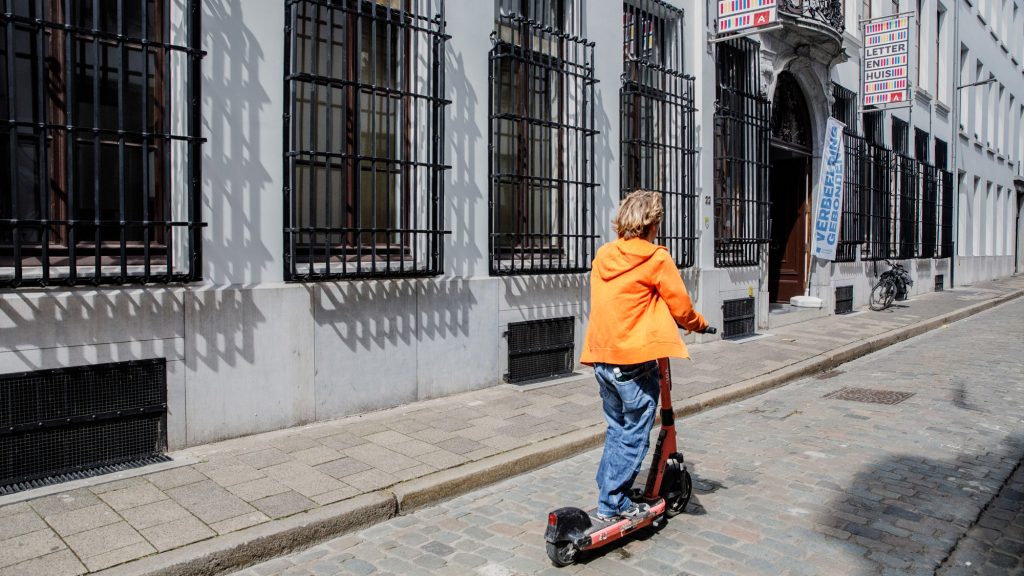
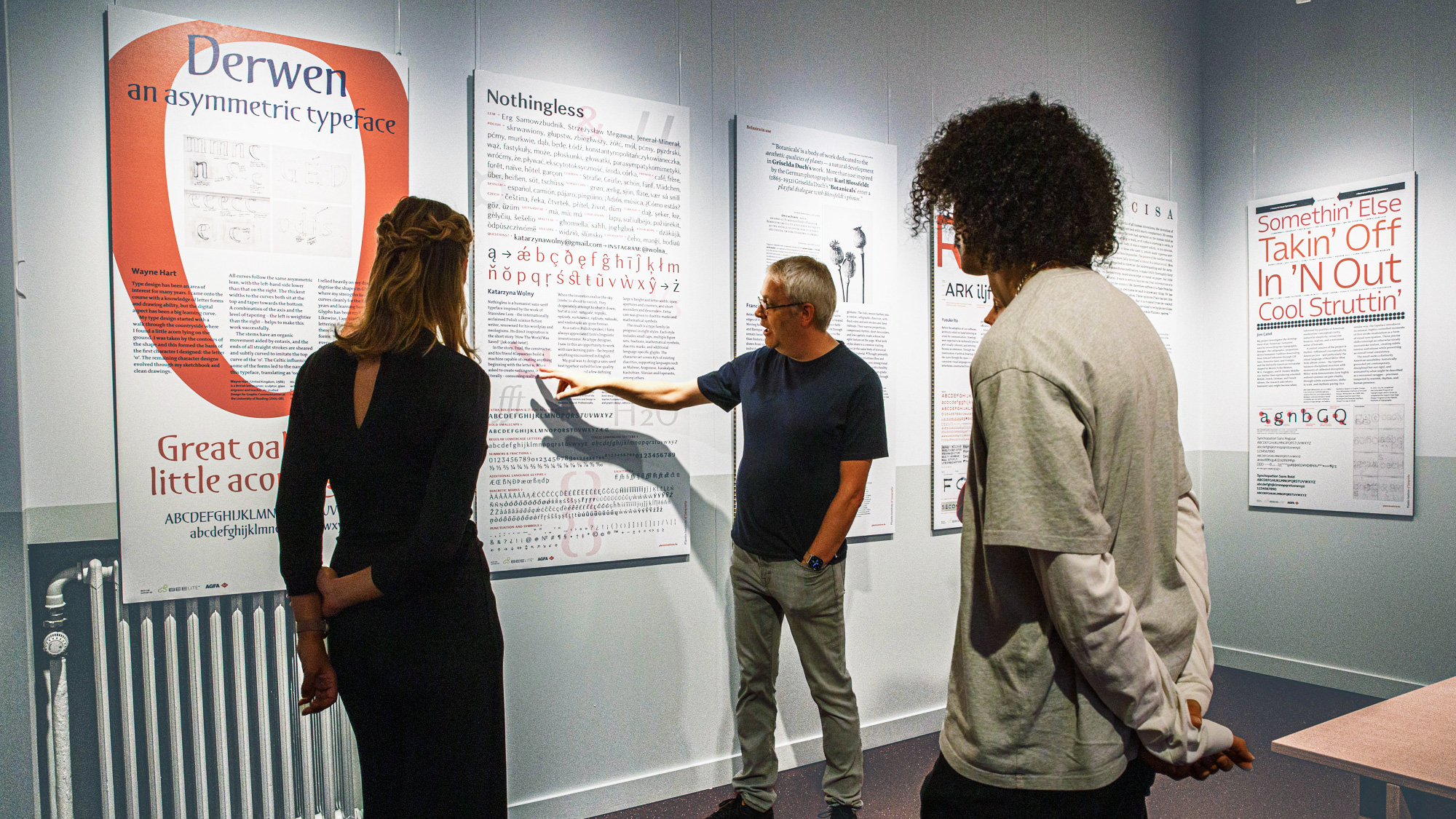
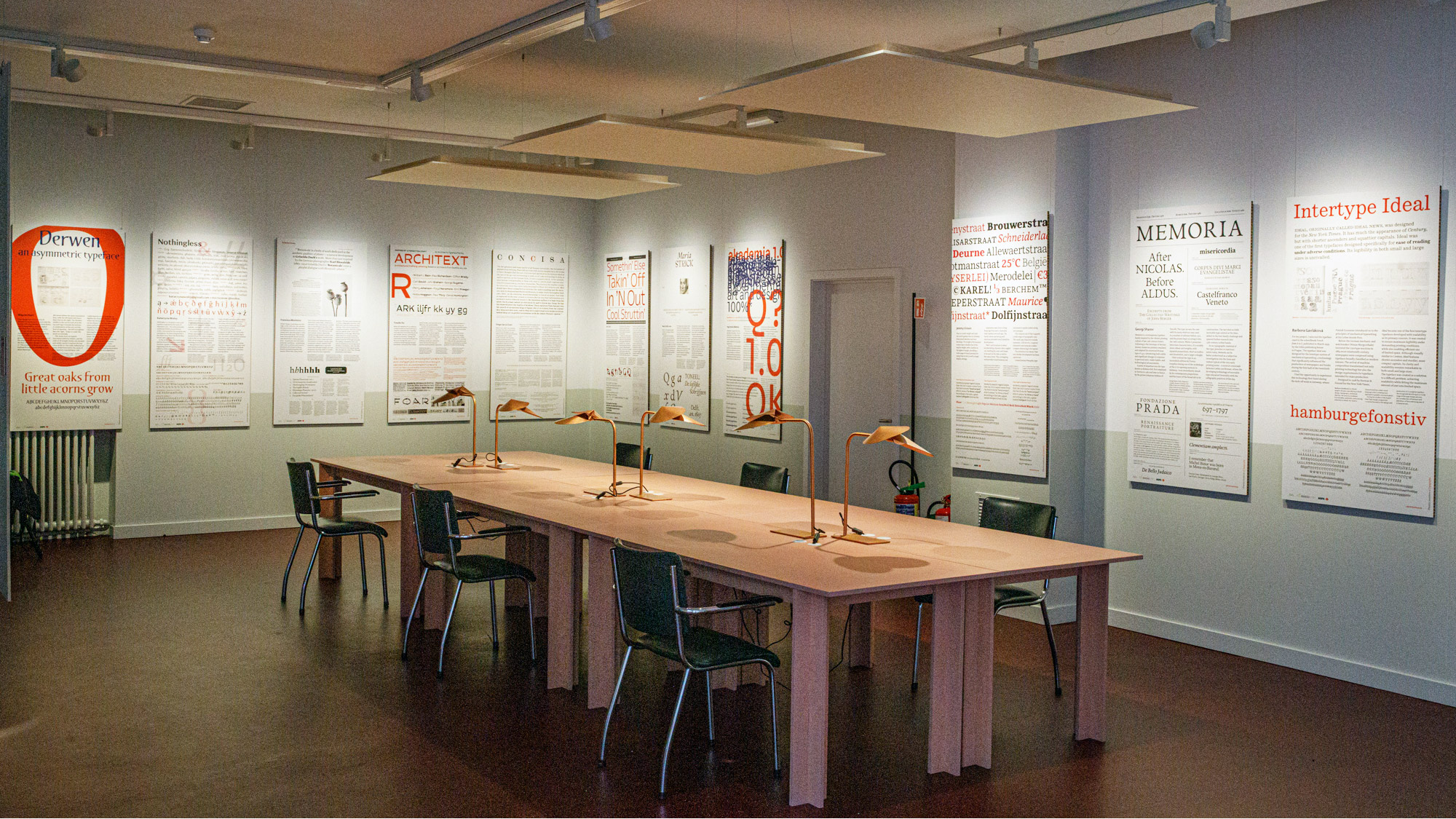
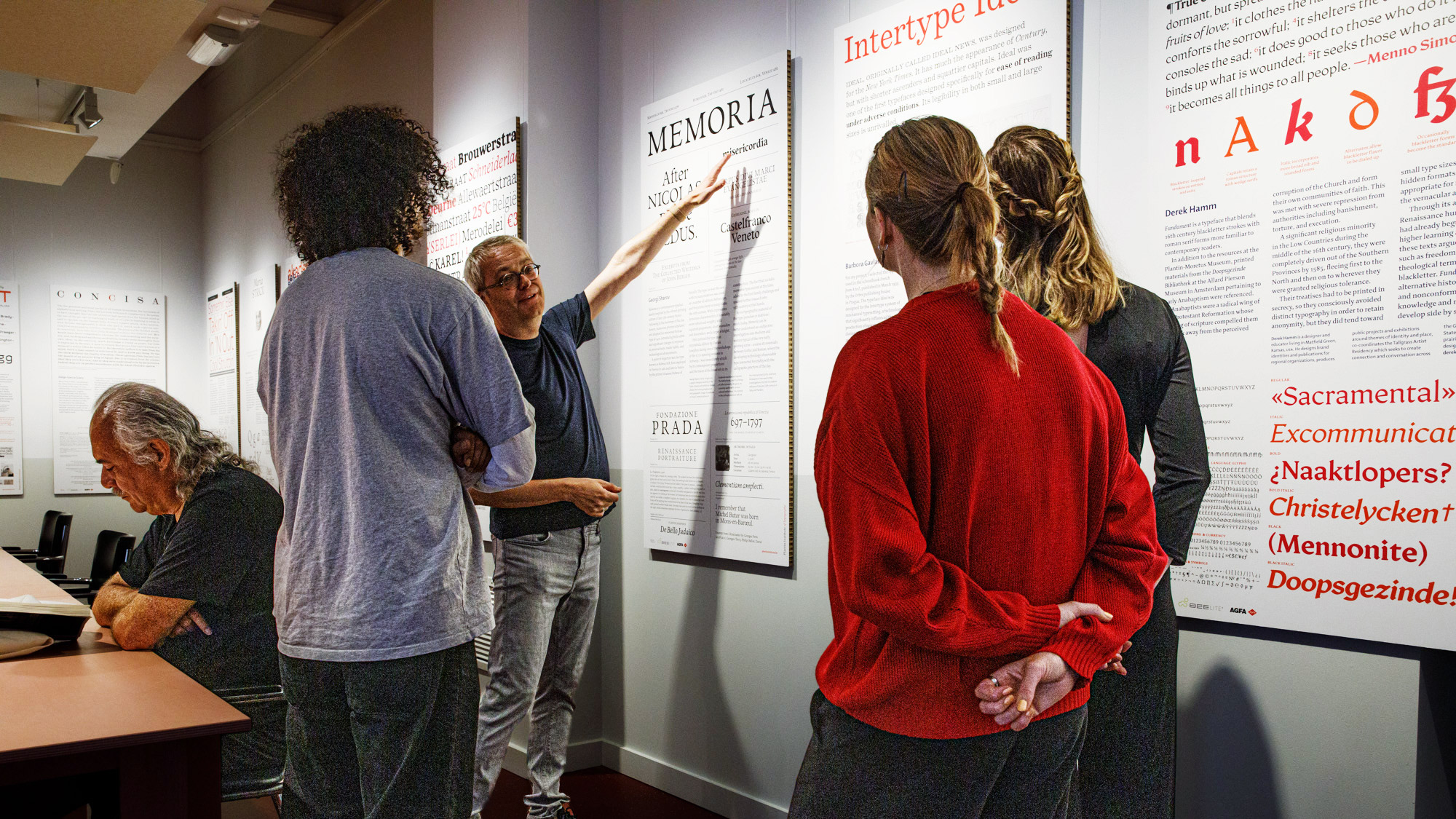
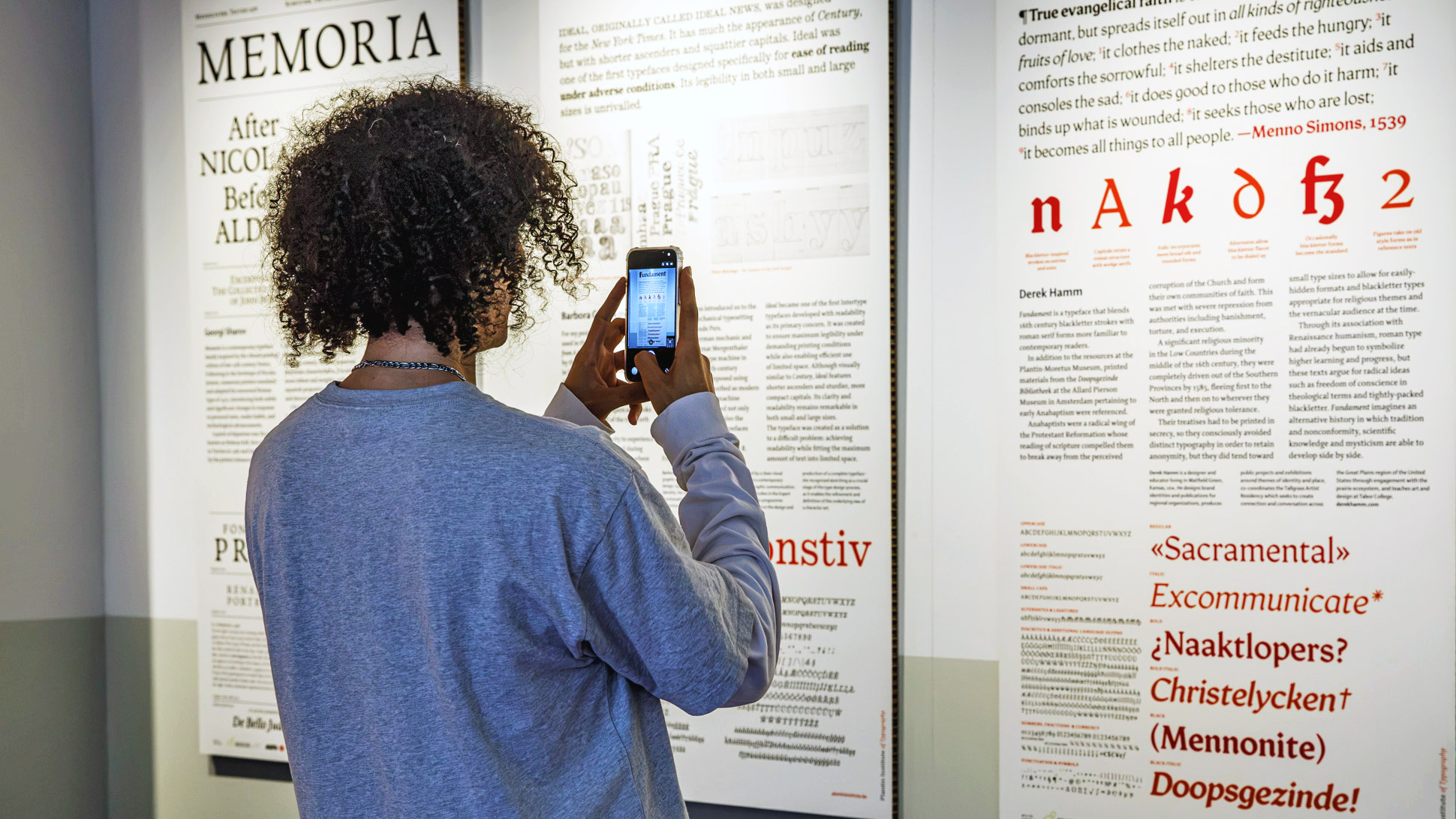
Following our exhibition sign to the left in the Letterenhuis, you will see thirteen new type families displayed on individual panels, each carefully designed by a student over eight months. As you walk around the exhibition space, the stylistic variety is striking. These creative designs draw on a huge range of historic inspirations, from sixteenth-century Anabaptist publications and calligrapher Maria Strick, to jazz albums, The New York Times and the lettering used by architects. As our students have developed expansive typeface families, exploring not only roman but bold and italic as well; making typefaces that are suitable for many different applications including editorial, branding, and packaging.
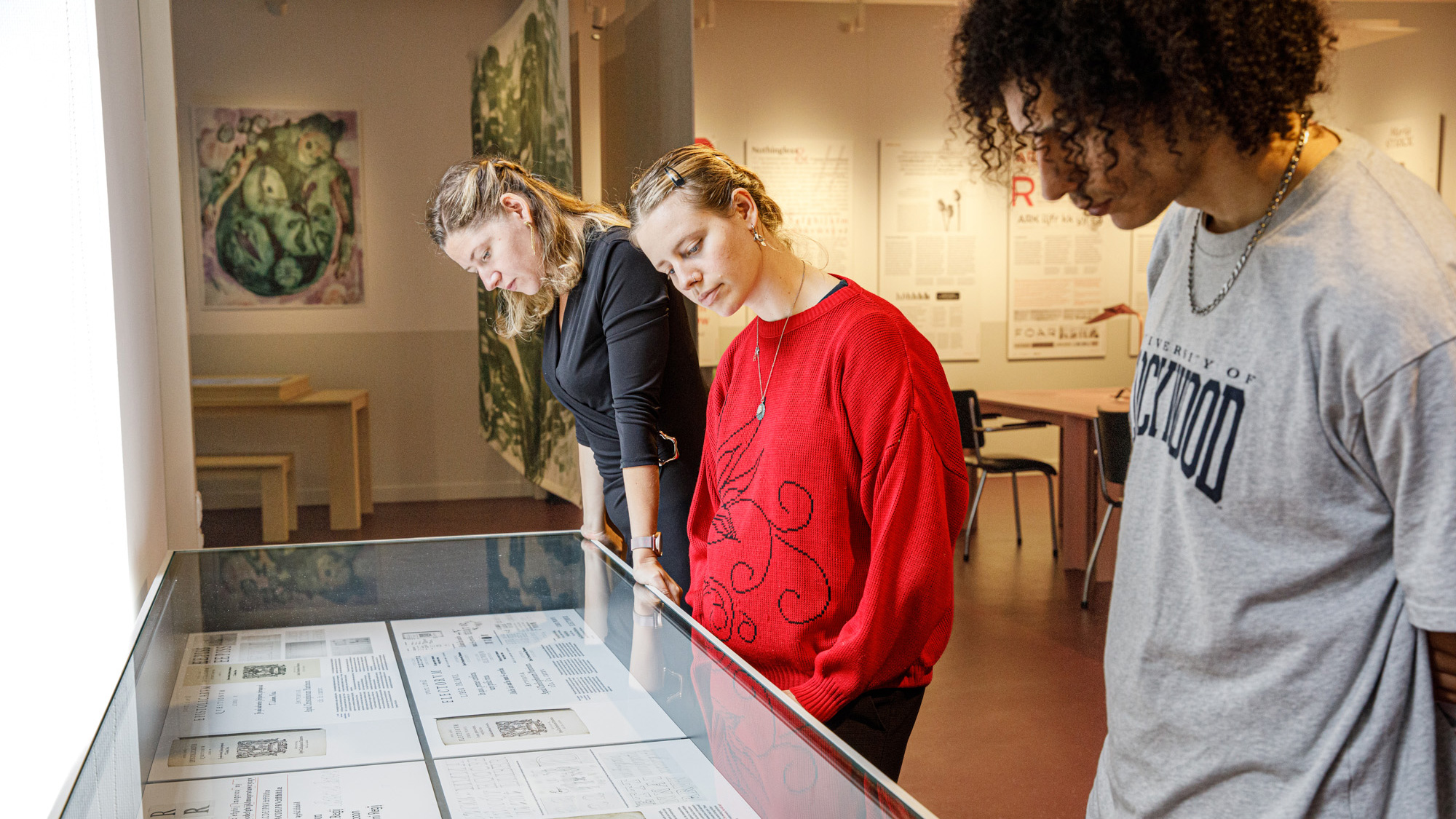
Alongside their individual designs, the type design process is shown through a step-by-step display and a group project where students replicated four historic title pages. The complexities and effort behind the students’ final work is revealed in many iterations of sketches and tiny technical adjustments. They have devoted significant time to all stages of the design process, working from initial sketches to digitisation and production.
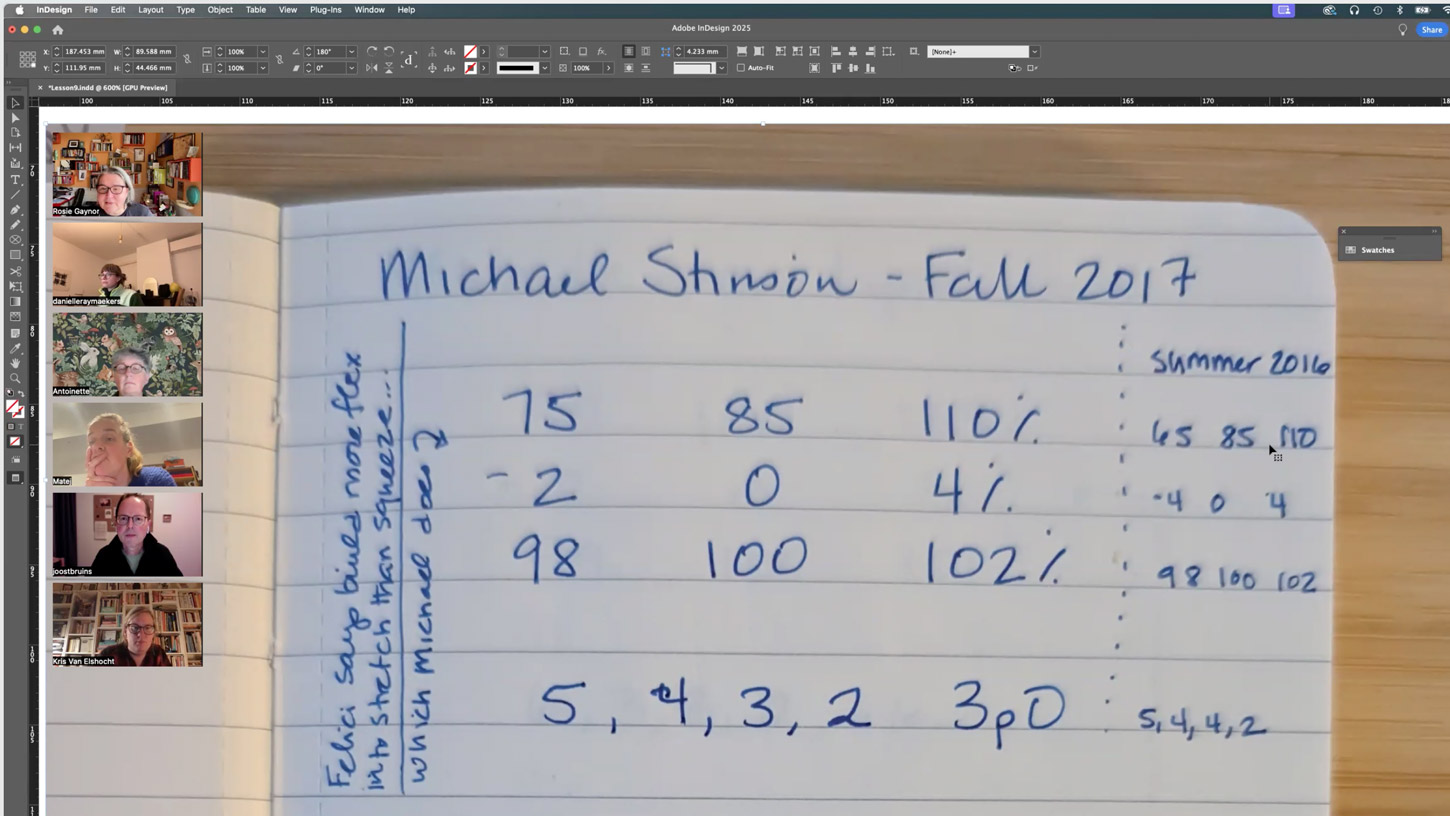
The renowned British type designer Jeremy Tankard leads the course. He has brought together the history of type design and its changing technologies, as well as practical requirements of the craft today, including hands-on training in industry standard software such as Glyphs.app and RMX Tools.
Type designs from: Jim Catel, Barbora Gavláková, Derek Hamm, Wayne Hart, Yusuke Ito, Agnieszka Małecka, Francisca Monteiro, Robbe Oyen, Diego Scaro, Georgi Sharov, María Valls Luna, Jeremy Vinson en Katarzyna Wolny.
‘Typografie & Boek’ programme
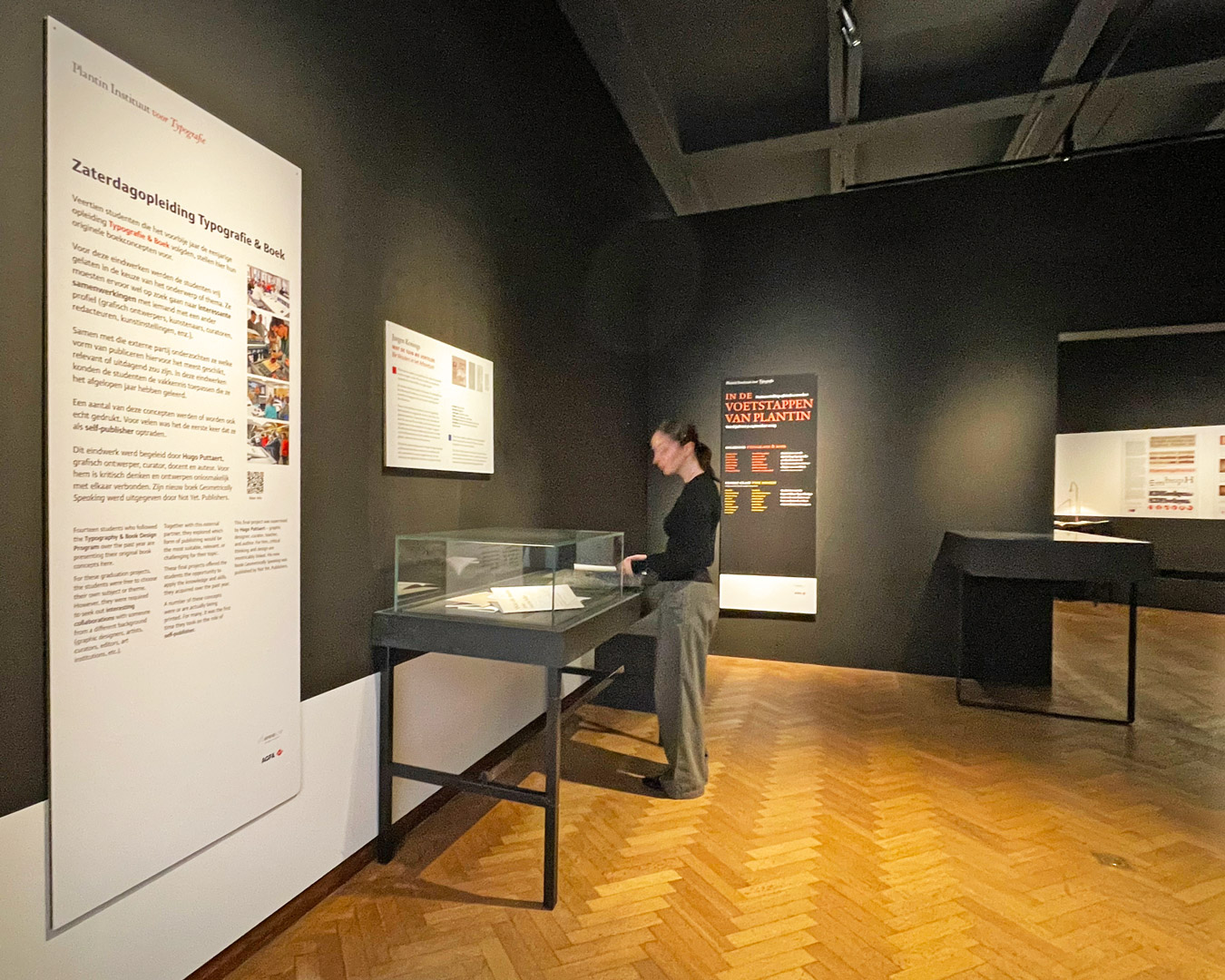
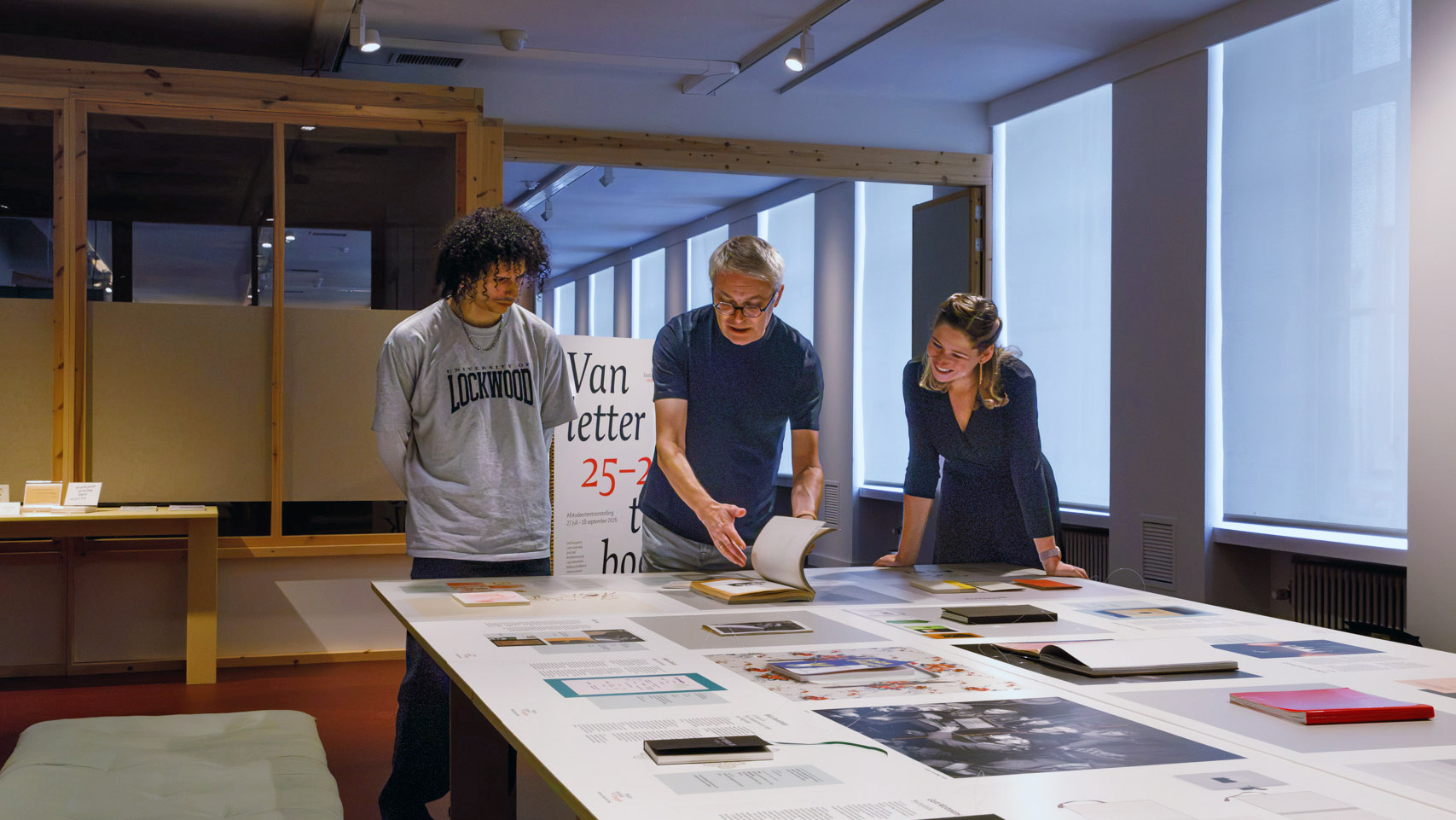
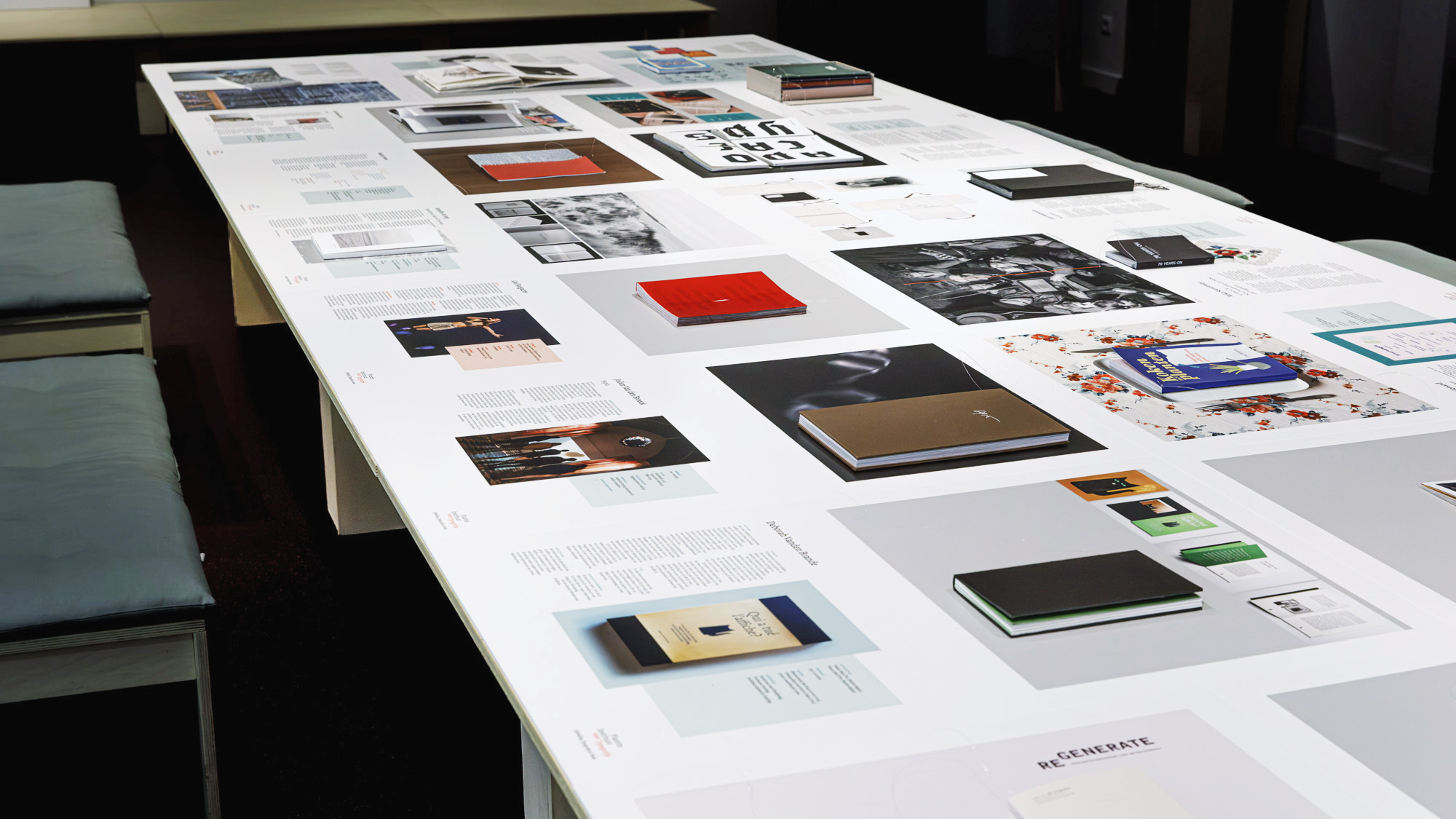
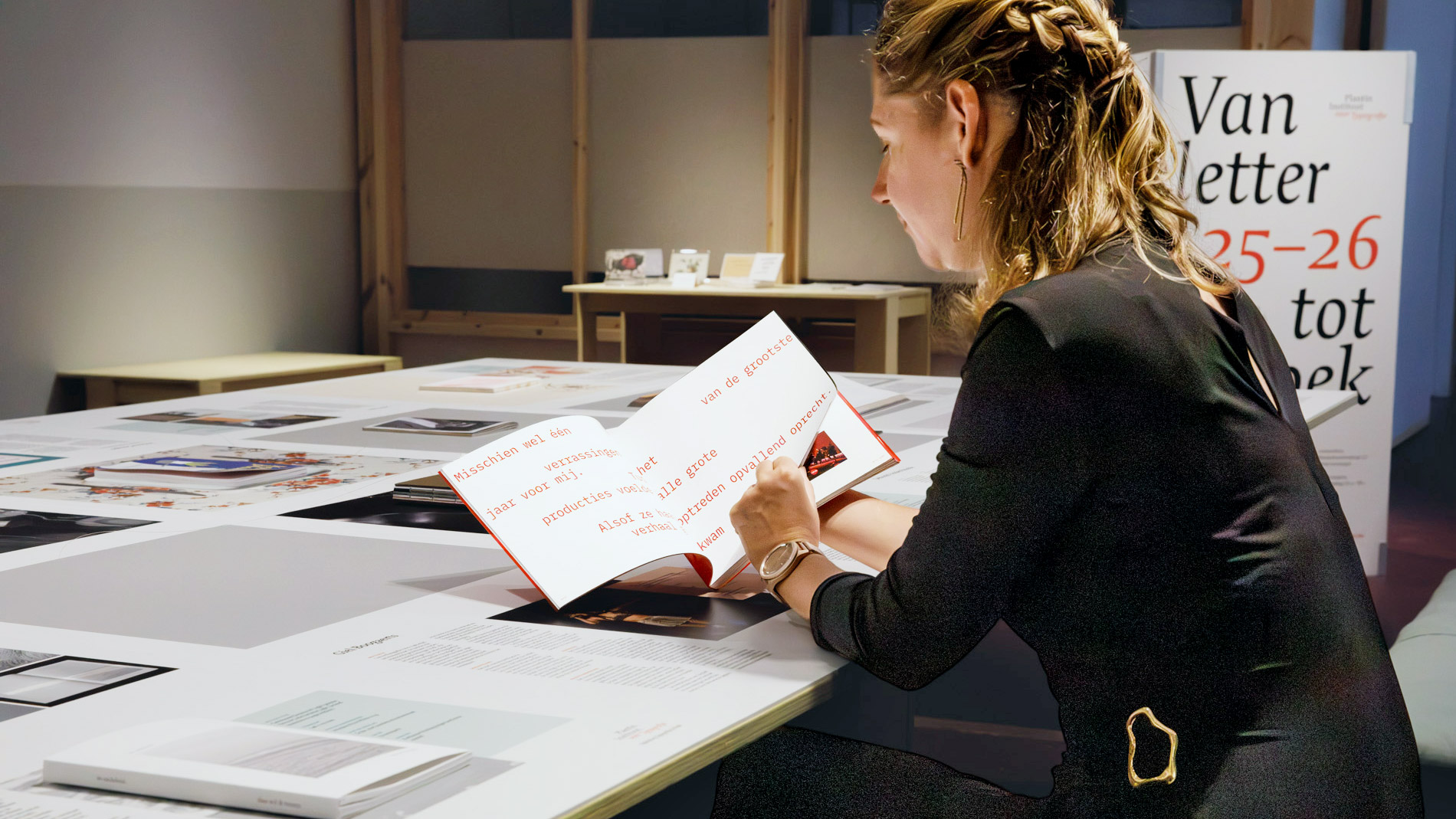
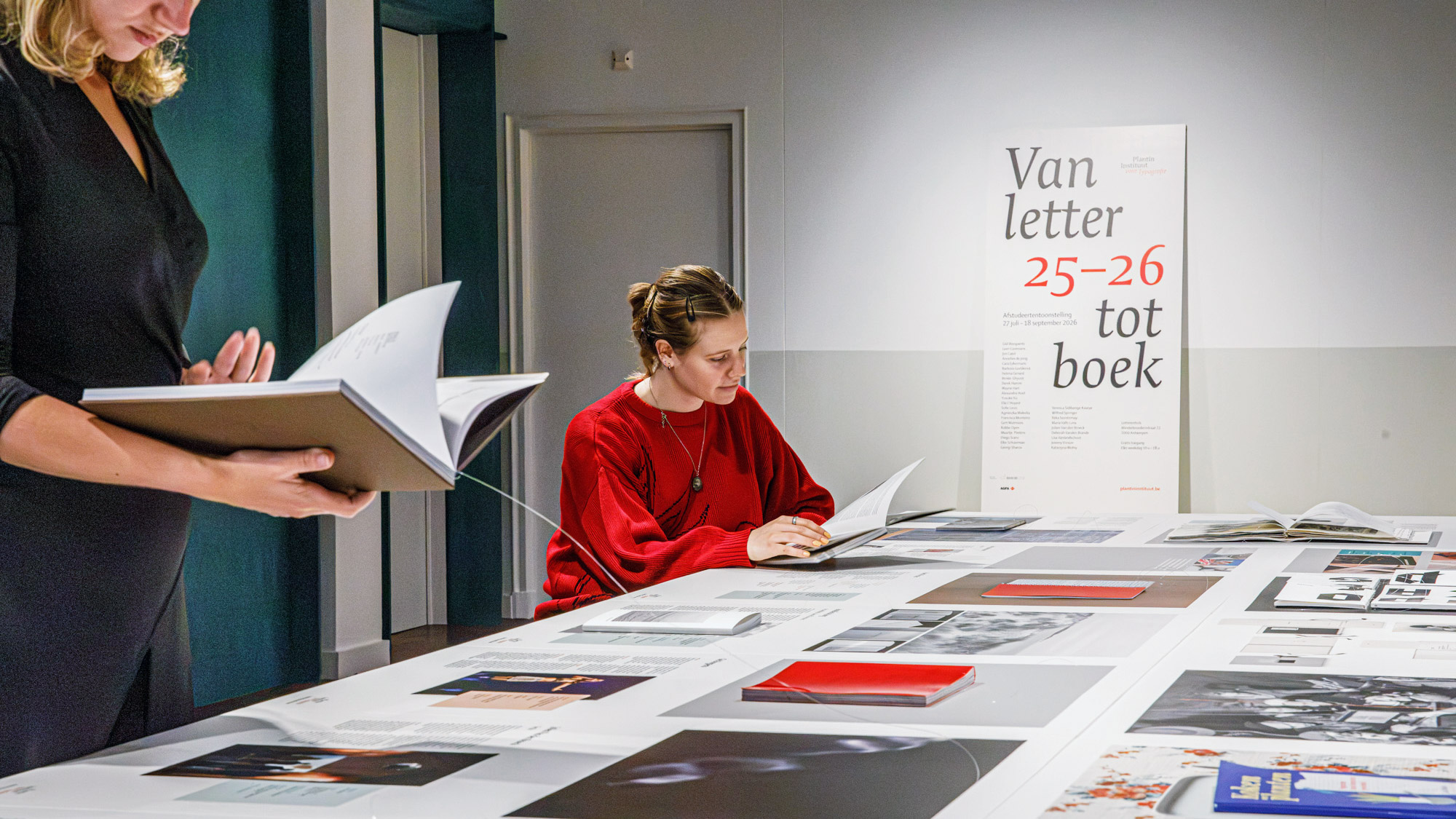
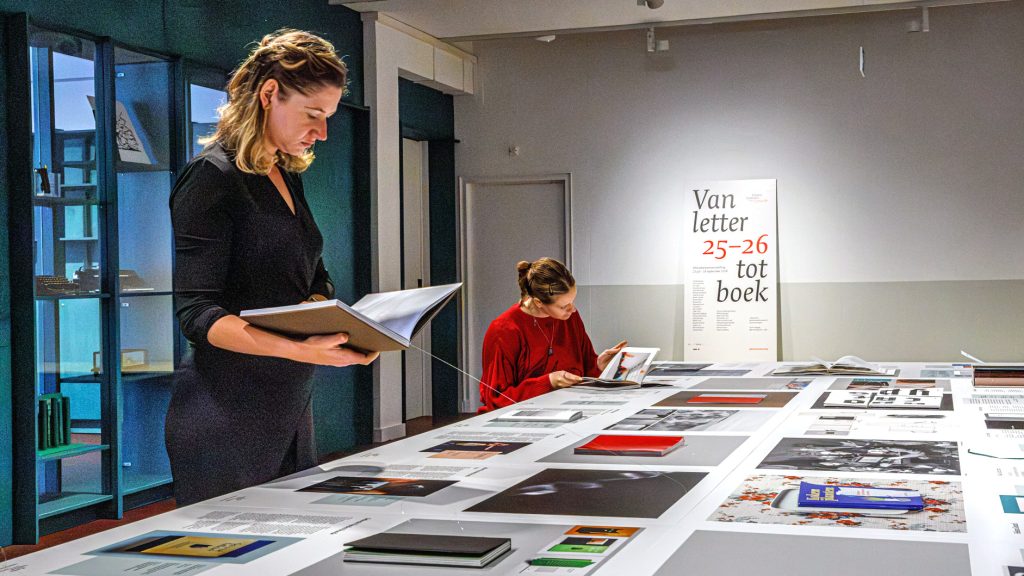
In the Letterenhuis workshop room to the right, you will find our students’ creative book designs, under the direction of Hugo Puttaert. Laid out across the central table are physical dummies of their designs, ready for you to leaf through and enjoy.
This year each student produced their own book, in collaboration with an external partner, leading to an exciting array of unique projects. These include photo and artists’ books, vegan cookbooks, and poetry volumes. Several students brought materials from Antwerp archives to life, from the distinctive logo designs of Paul Ibou (housed in the Letterenhuis itself) to the everyday photographs taken by Congolese members of Les Amicale des Marins Congolais.
Students took inspiration from their families too: one student designed a book showcasing her sister’s edible bouquet business. Others tell important stories through personal interviews and photography, such as one project commemorating the 70th anniversary of the Hungarian Revolution.
These books are made with many different techniques and materials, combining artworks, tracing paper, screen-printed material and creative binding techniques reflecting the book’s themes (such as a vinyl inspired book with different A and B sides and a book that mimics ‘unboxing’ an archive). The physical designs are as various as the book’s topics, leading to an unexpectedly tactile as well as visual exhibition.
Book designs by: Giel Boogaerts, Leen Caremans, Annelies de Jong, Cara Eykermans, Helena Genard, Renée Ghyoot, Alexandra Hoet, Elie L’Hoyest, Sofie Leon, Gert Motmans, Maartje Peeters, Elke Schuerman, Vennica Sidibanga-Kaseye, Wilfred Springer, Réka Szentirmay, Jolien Van den Broeck, Deborah Vanden Brande en Lisa Vanlandschoot.
The Dutch Saturday programme ‘Typografie & Boek’ provides all the knowledge and skills needed to design books, whether self-published or for a publisher. The course combines theory and practice, enabling students to learn a range of techniques from micro- and macro-typography to book-binding and editorial design. For further information please join us at the Institute on our Open Days on the 7th and 8th August (details can be found on the Practical Information / Open Day page).
Enrolling for next year’s Expert Class Type Design is not possible anymore. The class is full.
Practical Information:
- From 27 July to 18 September 2026
- Letterenhuis, Minderbroedersstraat 22, 2000 Antwerp
- Weekdays from 10 am to 6 pm. Free admission
- Also open during Museumnacht Antwerp (1 August, 7 pm – 1 am, only with Museumnacht ticket)
- At the moment, in the Letterenhuis you can see the permanent exhibition ‘Moeders’ also, and the exhibition from the Academy of Berchem, ‘Verbeelding gebonden’.